
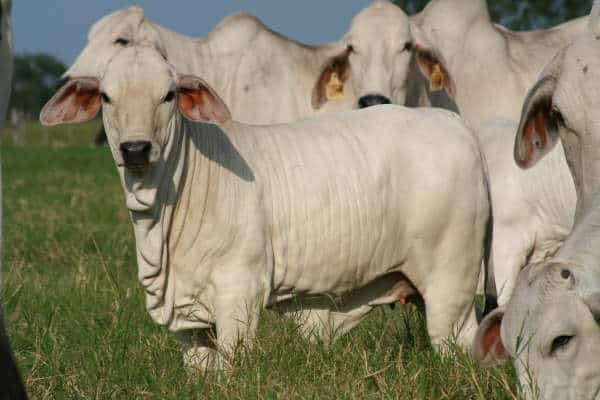
The Brahman breed in the United States was built from Bos indicus cattle imported from India in the early 1900s, primarily Guzerat, Nelore, Gir, and Krishna Valley bloodlines. Those cattle were not selected in a show ring. They were selected by nature. They survived heat, parasites, drought, and poor forage.
The original reputation of the Brahman was not built on frame size or exaggeration. It was built on fertility in harsh climates, structural soundness, maternal instinct, longevity, and the ability to maintain body condition on grass alone. These cattle were valuable because they worked where other breeds failed.
Over time, the public image of the Brahman began to drift away from the traits that made it valuable. Selection in many sectors shifted toward extremes, trends, and visual appeal rather than practical function. Today, the Brahman name carries a reputation for heat tolerance and hardiness, but a name alone does not guarantee those traits. In most cases, the modern population no longer reflects the original functional standard that built that reputation.
A breed is not defined by its registry or its marketing. It is defined by what it consistently produces under real-world conditions.
At Bos Sires, we do not promote Brahman cattle because of the hump, the ear, or the label. We represent Brahman cattle that prove themselves the way the originals once did — by breeding annually, maintaining flesh on forage, raising a calf unassisted, and remaining productive for years without excessive inputs.
The future of the Brahman is not found in exaggeration. It is found in returning to the functional, fertile, grass-efficient animal that built the breed’s name in the first place.
Brahman
GCB Gavilan Chambor086


GCB Gavilan CX Chuyipa
HM Hotshot 411


KCC 487
KCC 708
Mr Kallion 1352
Mr Kallion Scooby 1973